
Authorized distributor in the UAE
Complete hearing and balance solutions in the UAE
Authorized distributor of leading global brands in one place: Beltone hearing aids, BioMed Jena diagnostic devices, and PhysioSensing balance rehabilitation systems.
- Beltone
- BioMed Jena
- PhysioSensing
Beltone hearing aids
Hear life's details clearly and comfortably
Smart medical hearing aids from Beltone with light, comfortable designs, wireless phone connectivity, and precise fitting tailored to your hearing needs.
- Phone connectivity
- Rechargeable
- Behind-the-ear and in-ear styles
BioMed Jena — German-made
Hearing and vestibular diagnostics with German precision
A complete system for clinics and hospitals to measure hearing and assess the vestibular system, all managed from a single diagnostic management software, eDM.
- eVNG
- eHIT
- eABR
- eOAE
- eAUDIO
- eTYMP
PhysioSensing
Regain your balance with a measurable rehabilitation plan
Vestibular rehabilitation and postural stability assessment systems with interactive exercises and reports that track patient progress session after session.
- Otoneuro System
- Posturography Station
Al Ain · Abu Dhabi
Close to you across the UAE
Two branches in Al Ain and Abu Dhabi serve clinics, hospitals, and individuals throughout the country.
- For clinics and hospitals
- For individuals
Welcome to iHear
Advanced technologies in audiology and ENT diagnostics
We are UAE based company specializing in the distribution of hearing aids and medical equipment to clinics, hospitals and audiology centers, with the provision of fast local technical support and reliable after-sales services.

Welcome to iHear
Advanced technologies in audiology and ENT diagnostics
We are UAE based company specializing in the distribution of hearing aids and medical equipment to clinics, hospitals and audiology centers, with the provision of fast local technical support and reliable after-sales services.
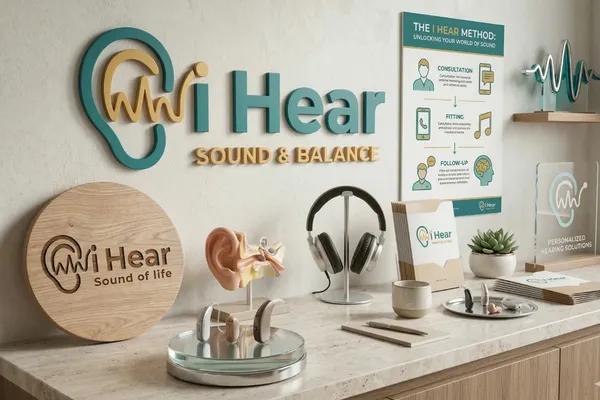
Learn about iHear
iHear is a UAE company that distributes Beltone hearing aids to individuals looking for a solution to hearing loss, and supplies German and European audiology, vestibular diagnostic, and vestibular rehabilitation equipment (BioMed Jena and PhysioSensing) to clinics, hospitals, and audiology centers. We serve our customers from our offices in Abu Dhabi and Al Ain, and across all the emirates: Dubai, Sharjah, Ajman, Ras Al Khaimah, Fujairah, and Umm Al Quwain.
Whether you are an individual looking for a hearing aid that suits your needs, or a clinic that wants to equip an audiology department or a balance laboratory, iHear is your local partner, with fast technical support and after-sales service wherever you are in the UAE.
- Distribution of Advanced Hearing Aids
- Provision of Audiology Diagnostic Devices
- Supporting Clinics and Hospitals with the Latest Medical Technologies
- Training, Technical Support, and After-Sales Service
Our Hearing Aids
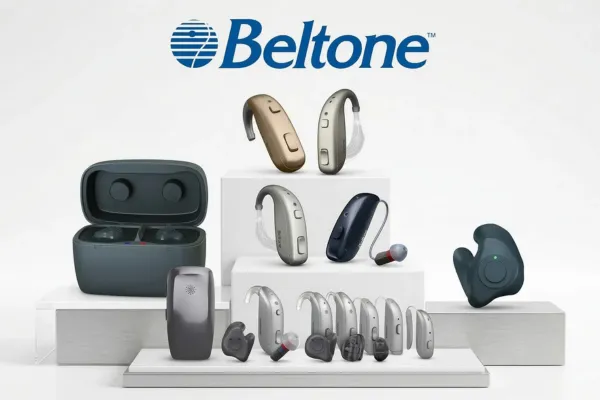
At iHear, we provide advanced hearing aids powered by cutting-edge technology and intelligent AI-driven sound processing, delivering exceptional clarity, comfort, and personalized performance. Our solutions are powered by Beltone, a global leader in innovation. Discover the latest Beltone range, including Envision, Boost Max, and Commence—designed to automatically adapt to your environment, enhance speech understanding, and provide a natural listening experience in every situation. From discreet RIC to powerful BTE devices, our hearing aids are tailored to meet all levels of hearing needs, ensuring effortless control, seamless connectivity, and a better quality of life through improved hearing.
Audiology and Vestibular Diagnostic Equipment
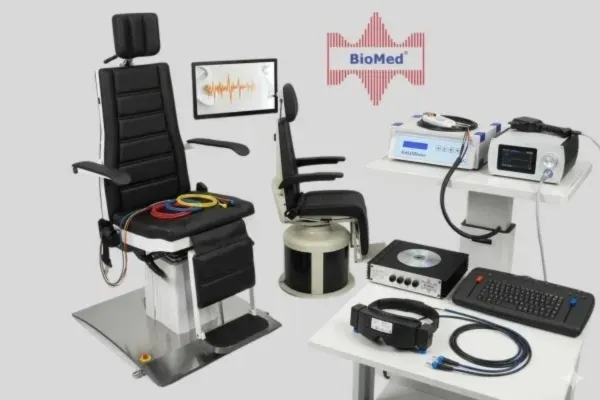
We provide comprehensive solutions for hearing and balance diagnostics, combining German precision with technological innovation. The catalog includes advanced audiological systems such as eAUDIOUSB and eTYMPUSB for hearing and middle ear assessment, in addition to eABRUSB and eOAE technologies for advanced testing and newborn screening. In the field of balance, systems like eVNGUSB and eHITUSB stand out for precise analysis of eye movements and semicircular canals, alongside KALORIstar thermal irrigation devices and the ePOSTURO system for posture analysis. All devices are integrated with the unified Diagnostic Manager (eDM) software to efficiently manage patient data, ensuring a professional workflow and accurate clinical diagnosis.
Vestibular Rehabilitation Systems
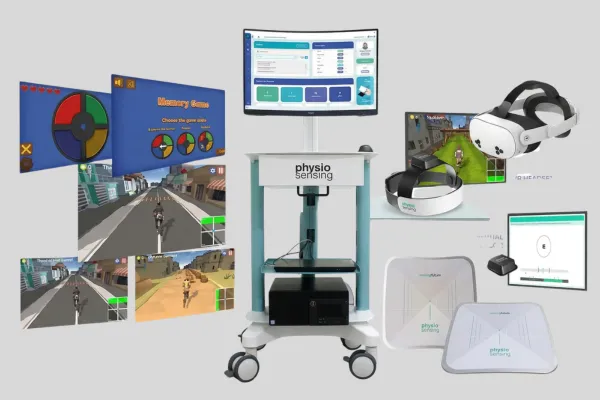
The PhysioSensing Otoneuro System and PhysioSensing Posturography Station are advanced solutions in the field of balance disorder assessment and treatment. The Otoneuro System provides a comprehensive platform that combines balance analysis, motion sensors, and virtual reality for accurate diagnosis and interactive therapy. Meanwhile, the Posturography Station focuses on high-precision balance measurement through a Force Plate platform, analyzing stability indicators and fall risk. Both systems support clinicians in making precise decisions, improving treatment outcomes, and delivering a better patient experience.
احصائيات ونتائج
Frequently Asked Questions
What is a hearing aid and how does it work?
+
A hearing aid is a small electronic device worn in or behind the ear. It amplifies and processes sounds to help people with hearing loss hear and understand speech more clearly.
Do I need a hearing test before buying a hearing aid?
+
Yes. A hearing test is the first step: it determines the type and degree of your hearing loss, helps you choose the right hearing aid and allows it to be fitted and programmed accurately. iHear offers a free hearing test at its branches in Al Ain and Abu Dhabi.
How much do Beltone hearing aids cost in the UAE?
+
The price of a Beltone hearing aid depends on the model, the technology level, your degree of hearing loss and the features you need, such as a rechargeable battery or a small discreet size. For an accurate quote for your case, book a free hearing test and contact the iHear team.
What are the differences between Beltone hearing aid models?
+
iHear offers the Beltone Envision, Boost Max S, Commence, Serene, Boost and Illuminate. The models differ by degree of hearing loss, design and features: Boost Max S suits severe hearing loss, Commence is a practical choice for first-time users, and Envision adapts automatically to your surroundings for a natural listening experience. A hearing care professional will help you choose the right model after your hearing test. Compare Beltone hearing aid models
Can I try a hearing aid before buying it?
+
Yes. iHear lets you try a hearing aid before you buy, after it has been programmed to your hearing test results, so you can check its comfort and sound clarity in your daily life.
How does remote hearing aid adjustment work?
+
Your hearing care professional connects to your hearing aids over the internet through the phone app and adjusts the amplification settings and programs directly, so you don't need to visit the branch for every minor adjustment.
Where are iHear's branches, and do you serve the rest of the UAE?
+
iHear has two branches. The Abu Dhabi branch is on Sultan Bin Zayed the First Street (Muroor Road), Building 1210, Offices M6, tel. 02 681 3841. The Al Ain branch is in Al Humaireh, 136 Khalifa Bin Zayed Street, Mezzanine 2, Office 3, tel. 03 768 5563. We serve customers across all the emirates, including Dubai, Sharjah, Ajman, Ras Al Khaimah, Fujairah and Umm Al Quwain.
Is iHear an authorized Beltone distributor in the UAE?
+
Yes. iHear is an authorized distributor of Beltone hearing aids in the UAE, supplying genuine hearing aids with after-sales service and local technical support.
Does iHear sell to individuals or to clinics and hospitals?
+
Both. We provide Beltone hearing aids directly to individuals with a free hearing test, and we supply German BioMed Jena hearing and balance diagnostic equipment and PhysioSensing rehabilitation systems to clinics, hospitals and audiology centers.
What audiology equipment does iHear supply to clinics?
+
From BioMed Jena we supply the eAUDIO USB audiometer, the eTYMP USB middle ear analyzer (tympanometer), the eABR USB auditory brainstem response (ABR) system, the eOAE newborn hearing screening device and the AudioBox free-field amplifier for testing children's hearing. All of them work with the eDM data management software. Browse audiology equipment
Do you supply equipment for diagnosing vertigo and treating balance disorders?
+
Yes. We supply vestibular and balance diagnostic equipment such as the eVNG for video nystagmography (VNG), the eHIT for the video head impulse test (vHIT), the KALORIstar CT caloric air irrigator and the eVEMP, along with the Otoneuro System for vestibular rehabilitation and the Posturography platform for balance and fall risk assessment. Browse vestibular and balance equipment
What are the signs of hearing loss, and when should I get a hearing test?
+
Common signs include difficulty understanding speech in crowded places, frequently asking people to repeat themselves, turning the TV volume higher than usual, and hearing ringing in the ears (tinnitus). If you notice any of these, we recommend a hearing test with a qualified audiologist.
For more information
Feel free to contact us anytime. Our team is always ready to help you.