eVNG USB Video Nystagmography (VNG) System: Dizziness and Vertigo Diagnostic System From BioMed Jena
The eVNG USB is BioMed Jena’s modular video nystagmography (VNG) system for assessing dizziness, vertigo, and balance disorders. BioMed Jena is a German company and one of the world’s five largest makers of audiology and vestibular diagnostic equipment. The eVNG records and analyzes the involuntary eye movements (nystagmus) linked to the function of the vestibular system in the inner ear, a method widely used to help assess the causes of vertigo and balance disorders such as benign paroxysmal positional vertigo (BPPV), vestibular neuritis, and Ménière’s disease.
The eVNG uses an improved image-processing algorithm that can extract the pupil from the video stream even if the patient wears eye makeup. It connects to a PC or notebook through USB 2.0, and no other computer hardware is required.
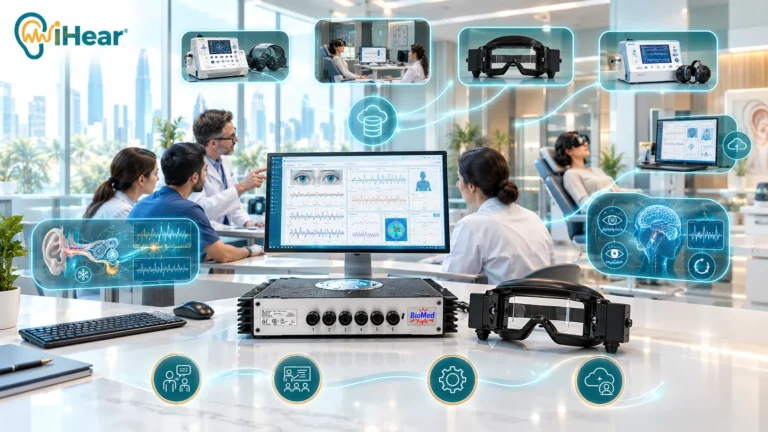
iHear is the exclusive authorized distributor of BioMed Jena in the UAE. It offers the eVNG to hospitals, ENT centers, and neurology clinics that diagnose dizziness, vertigo, and balance disorders, with local technical support and training.
What Is Video Nystagmography (VNG)?
Video nystagmography (VNG) works on a direct scientific principle. When the vestibular system of the inner ear is not working normally, the eyes can move involuntarily (nystagmus) because of the direct nerve connection between the inner ear and the eye muscles, known as the vestibulo-ocular reflex (VOR). The eVNG records these movements with a binocular video goggle that uses infrared illumination, and its software analyzes them automatically to show the type, strength, and direction of the nystagmus. This is information that helps the clinician tell a peripheral (inner-ear) cause from a central (brain) cause.
In short, the eVNG is a video nystagmography system that connects to the computer through USB 2.0. Its binocular video goggle records the movement of each eye separately at 100 frames per second (binocular 100 Hz, with a resolution of less than 0.2°), using a 1280 x 1024 pixel camera and infrared light. An improved image-processing algorithm can extract the pupil from the video stream even if the patient wears eye makeup.
The system is built on a patient database that can be accessed through the facility’s local network, and it is operated from one application that shows all the tests with the date of examination and the kind of test.
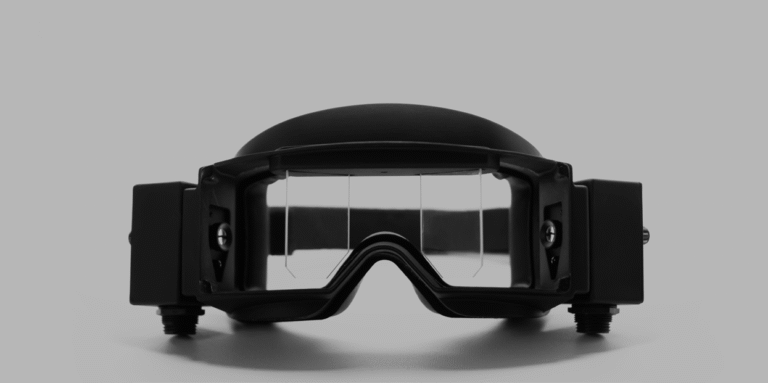

eVNG USB Video Nystagmography System: Key Features.
Real-time image of the eyes, to follow eye movements live during the test.
Improved image-processing algorithm that can extract the pupil even if the patient wears eye makeup.
Automatic nystagmus detection and calculation of all relevant parameters.
Improved automatic artefact rejection.
Fully automatic test sequences.
Stable binocular video goggle with a mask cover, and a soft cushion for an optimal, comfortable fit.
Hot mirror adjustable in three steps.
Foot switch, for hands-free operation during the test.
Detailed results printout from the software.
No other computer hardware required: the eVNG connects to a PC or notebook through USB 2.0.
The eHIT and eVNG can be combined in one system on request, to extend the range of tests.
Network ready, with a central patient database.
Binocular analysis at 100 frames per second.
Manual nystagmus marking, to check the results.
Compatible with Windows 10/11.
eVNG USB Clinical Uses: What Does It Help Assess?
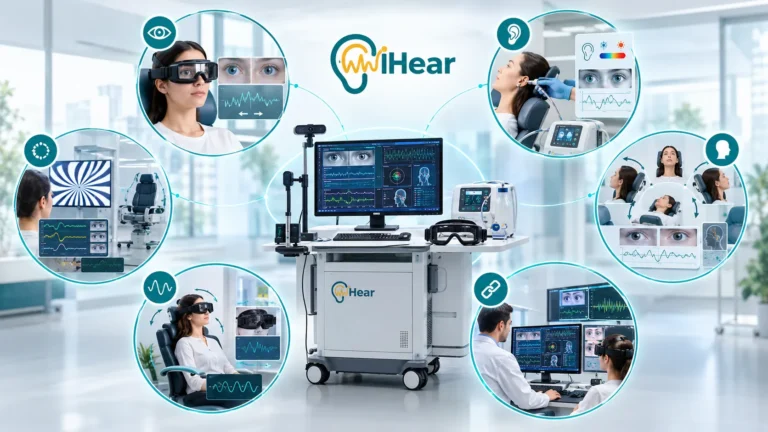
Why Do Vestibular Specialists Use the eVNG USB Video Nystagmography System?
The eVNG USB is a modern video nystagmography (VNG) system used to assess the function of the vestibular system in the inner ear by recording and analyzing involuntary eye movements (nystagmus). It is used to:
Help assess peripheral vertigo caused by an inner-ear problem (such as vestibular neuritis and Ménière's disease).
Help tell central vertigo (linked to the brain or nervous system) apart from peripheral vertigo.
May be used to assess patients after head trauma and concussion.
Follow-up of patients with chronic balance disorders.
How Does the eVNG USB Video Nystagmography System Work?
The eVNG USB connects to the computer through a USB 2.0 port. Its binocular video goggle, with infrared illumination, captures the image of the eyes in real time, and the software then automatically does the following:
Detects nystagmus automatically and calculates all the relevant parameters.
Rejects artefacts automatically, to reduce errors in the readings.
Runs full test sequences automatically (spontaneous nystagmus, caloric test, and positioning tests).
Saves each patient's results in a patient database that can be accessed over the facility's local network.
eVNG USB Technical Specifications
| Specification | Details |
|---|---|
| Power | USB-powered system |
| Sample rate | Binocular, 100 Hz |
| Resolution | Less than 0.2° |
| Camera | 1280 × 1024 pixels |
| Connectivity | 2 × Mini-USB type B to USB 2.0 (PC), and 1 × Mini-USB type B to USB 1.1 (PC) |
| Illumination | Infrared (IR) light according to DIN EN 60825-1 |
| Applied standards | EN 60601-1 / 1-1 / 1-2 and MDD (European Medical Device Directive) |
| Software | Windows 10/11 |
| Cables | Camera and foot-switch cables, 3 meters each |
| Additional requirements | No other computer hardware required |
Real-time image of the eyes
Improved image-processing algorithm that works even with eye makeup
Automatic nystagmus detection and calculation of all relevant parameters
Improved automatic artefact rejection
Fully automatic test sequences
Stable binocular video goggle with a mask cover
Soft cushion for a comfortable, lightproof fit
Hot mirror adjustable in three steps, and a foot switch
Detailed results printout
The eHIT and eVNG can be combined in one system on request
Combi Video Goggle System
The eVNG Combi mask can be used for tests either in darkness or with visual stimulation. The video image is focusable and can be adjusted individually, both horizontally and vertically, on the patient’s eye. A soft cushion gives a comfortable, lightproof fit to the face. A comfortable fit helps with testing, but whether the test suits a child depends on the child’s age, ability to cooperate, and the clinician’s judgment.
Optional Accessories for the eVNG USB System
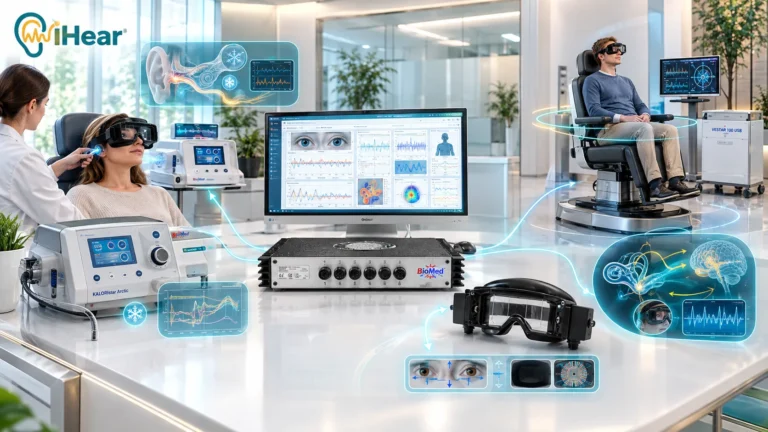
KALORIstar Arctic: air caloric irrigator. A powerful tool for stimulating the vestibular system using active cooling, which ensures a cold stimulus (7 K below ambient temperature) with an air flow of 5 liters per minute. It can be remote controlled directly from the eVNG software with one button, which makes it useful both in daily clinical practice and in clinical research.
VESTAR 100 USB rotary chair:
For rotational testing when a deeper assessment than caloric testing alone is needed.
Combi video goggle:
Used either in darkness or for visual stimulation, with a video image that can be focused and adjusted both horizontally and vertically on the patient's eye.
Who Is the eVNG USB Video Nystagmography System For?
Ear, Nose, and Throat (ENT) Clinics
A diagnostic tool for patients who report recurring vertigo or dizziness, to help assess peripheral causes (such as BPPV and vestibular neuritis) and tell them apart from central causes.
Neurology Clinics and Centers
To help tell balance disorders of vestibular origin apart from those of central neurological origin.
Vestibular Rehabilitation Centers and Hospitals
To assess the vestibular condition before planning a suitable vestibular rehabilitation program (for example with PhysioSensing's Otoneuro System, also offered through iHear).
Clinical Research Centers and Medical Universities
With a measurement resolution of less than 0.2°, manual control of nystagmus marking, and offline processing of the measurement data.
eVNG USB Test Workflow, Step by Step
The eVNG USB plugs into the computer's USB 2.0 port. Its binocular video goggle, with infrared illumination, captures the image of the eyes in real time, and the included software then takes over automatically:
Detecting nystagmus and calculating all the relevant parameters.
Rejecting artefacts to reduce errors in the readings.
Running complete test sequences (spontaneous nystagmus, caloric test, and positioning tests).
Storing each patient's results in a networked patient database that can be reached over the facility's local network.
eVNG USB vs. Other Video Nystagmography Systems: What to Compare
| Criterion | eVNG USB (BioMed Jena, through iHear) | VisualEyes™ (Interacoustics) |
|---|---|---|
| Country of origin | Germany | Denmark |
| Angular resolution | Less than 0.2° | Varies by model |
| Sample rate | Binocular, 100 Hz | Varies by model |
| Works with eye makeup | ✅ Improved image-processing algorithm | Ask the manufacturer |
| Integration with the video head impulse test (vHIT) | ✅ Optional: the eHIT and eVNG can be combined in one system | Depends on the model and the options chosen |
| Air caloric irrigator with active cooling | ✅ KALORIstar Arctic, controlled from the eVNG software with one button | Depends on the accessories chosen |
| Local support in the UAE | iHear, the exclusive authorized distributor of BioMed Jena | Ask the manufacturer for its UAE distributor |
eVNG values are from BioMed Jena's datasheet. Specifications of other systems vary by model and change over time, so check each manufacturer's current information. The right system depends on your protocols, patient volume, and budget; contact iHear to discuss it.
eVNG USB vs. Electronystagmography (ENG): What Is the Difference?
| Point of comparison | eVNG USB (video recording) | ENG (electrodes) |
|---|---|---|
| Recording method | Infrared video recording of the eyes | Skin electrodes placed around the eyes |
| Effect of eyelid movement and blinking | Records the eye itself directly | Recordings can be affected by blinking and sweat |
| Patient set-up | A video goggle, with no electrodes attached to the skin | Skin preparation and electrodes attached to the skin |
| Nystagmus detection | Automatic, with automatic artefact rejection | May need more manual analysis |
| Test sequences | Full automatic test sequences | May need more manual steps between stages |
| Use with children | Depends on the child's age, ability to cooperate, and the clinician's judgment; a soft cushion and a comfortable mask help the fit | Depends on the child's age, ability to cooperate, and the clinician's judgment; electrodes on the skin may be harder for some children |
| Future expansion | Ready for the eHIT, optokinetic tests, and a rotary chair (VESTAR 100 USB) in one system | May require separate systems |
The choice between video and electrode recording depends on the test protocol and the clinician's judgment. eVNG values are from BioMed Jena's datasheet.
Buy the eVNG USB Video Nystagmography System in the UAE From iHear
eVNG USB FAQ: Common Questions About the Video Nystagmography System From BioMed Jena
For more information
Feel free to contact us anytime. Our team is always ready to help you.