

Short answer: Start with a hearing test by a qualified audiologist to learn the type and degree of your hearing loss. Then choose a style and technology level that fit your daily life and budget, try the device before you buy, and ask about warranty and follow-up. The best hearing aid isn’t the priciest or the smallest; it’s the one fitted most accurately to your hearing.
If you’ve ever searched “hearing aid” online, you know how overwhelming it gets. Tiny devices, big promises, wildly different prices, and a long list of terms nobody explains. The World Health Organization estimates that more than 1.5 billion people live with some degree of hearing loss, so you’re certainly not alone in trying to make sense of it.
Here’s the thing most guides skip: a hearing aid isn’t a gadget you simply pick off a shelf. It’s a medical device that has to be programmed for your ears, worn for many hours a day, and fine-tuned over the following weeks. It’s common for people to buy a device because of an ad, a price, or a tiny size, then leave it in a drawer a month later because it just didn’t suit them. Most of the time, the device wasn’t the problem. The way it was chosen was.
This hearing aid buying guide walks you through seven steps in the order that actually works, from the hearing test to the trial period, along with the questions worth asking before you spend a single dirham. If you’re shopping for a parent, there’s a section written just for you.
What Is a Medical Hearing Aid, and How Is It Different From a Sound Amplifier?
A medical hearing aid is a small electronic device worn behind or inside the ear. Microphones pick up sound, a processor adjusts it, and a tiny speaker delivers it into your ear canal, all based on the results of your own hearing test. In most countries hearing aids are classified as medical devices, which is why they should be fitted by a trained professional.
That’s the key difference between a medical hearing aid and the personal sound amplifiers sold in some shops and online. An amplifier makes everything louder by roughly the same amount, background noise included, and it knows nothing about which pitches you struggle with. A hearing aid is programmed to boost the sounds you’re missing more than the ones you hear fine, and to separate speech from noise as far as it can.
One honest expectation before we start: a hearing aid doesn’t bring your hearing back to what it was when you were twenty. It helps you hear speech and important sounds more clearly. How much it helps depends on the type of hearing loss, how accurately the device is fitted, and how consistently you wear it.
The 7 Steps at a Glance
- Get a hearing test from a qualified audiologist before buying anything.
- Understand the type and degree of your hearing loss. They decide whether a hearing aid suits you and how powerful it needs to be.
- Pick the style that fits your ear, your hands, and your taste: behind the ear or in the ear.
- Choose the technology level you really need, based on the places where you listen.
- Think about comfort and ease of use. This matters most for seniors.
- Set a realistic budget that covers the device, the follow-up care, and the warranty, not just the price tag.
- Try before you buy, and ask about fitting, warranty, and after-sales service.
Let’s take them one at a time.
Step 1: Do I Need a Hearing Test Before Buying a Hearing Aid?
Yes, and this is the one step you shouldn’t skip. The test tells you whether the problem is really your hearing, what type it is, how severe it is, and whether a hearing aid is the right answer or whether you need medical treatment first. Without it, you’d be buying a device by guesswork, and it could easily be weaker than you need or wrong for your type of hearing loss.
What happens during a hearing test?
It’s comfortable and painless, and it usually takes somewhere between thirty minutes and an hour. The audiologist starts with a few questions: when did you first notice the problem, is it in one ear or both, is there ringing or dizziness? Then they look into your ear canal with a small scope to make sure it’s free of wax or infection.
Next, you sit in a quiet room with headphones and press a button every time you hear a faint tone. The result is a chart called an audiogram, a map of the quietest sound you can hear at each pitch. Most clinics add a speech test too, because understanding words is not the same as hearing sounds, and a measurement of how your eardrum moves can help check the middle ear.
iHear offers a free hearing test at its branches, and you can book one through WhatsApp. Whether you test with us or somewhere else, make sure the person doing it is qualified, and ask for a copy of your results so you can compare offers later.
When should you see an ENT doctor first?
Some situations call for a doctor before any hearing aid, because the cause may be treatable. See an ear, nose, and throat (ENT) specialist first if you notice:
- Sudden hearing loss, especially in one ear. This needs urgent medical attention, because delay can reduce the chance of recovery.
- Hearing that is clearly worse in one ear than the other.
- Ear pain, discharge, or repeated infections.
- Dizziness or a feeling of being off balance.
- Ringing in only one ear, or ringing that pulses with your heartbeat.
- A blocked ear that might be wax or something stuck inside.
If your hearing has faded gradually in both ears, as often happens with age, the usual path is simple: hearing test with an audiologist, then choosing the hearing aid.
Step 2: Know the Type and Degree of Your Hearing Loss
After the test you’ll hear two terms: type and degree. They’re worth a minute of your attention because they settle a lot of what comes next.
What are the types of hearing loss?
- Conductive hearing loss: sound isn’t passing properly through the outer or middle ear, for example because of wax, fluid behind the eardrum, or a perforation. Many causes can be treated medically or surgically, and a hearing aid may help in some cases.
- Sensorineural hearing loss: the problem lies in the inner ear (the cochlea) or the hearing nerve. It’s the most common type with ageing or after long exposure to loud noise, and this is where hearing aids are usually the main solution.
- Mixed hearing loss: a combination of both. The doctor treats whatever can be treated, then the hearing aid is programmed for what remains.
What matters for your decision is that your audiologist tells you which type you have, because that decides whether you start with a hearing aid or with treatment.
How is the degree of hearing loss classified?
The World Health Organization groups hearing loss by the average level of the quietest sound you can hear, measured in decibels (dB). Here’s a simplified version. The descriptions are approximate, and your audiologist will interpret your own results.
Degree | Average hearing level (dB) | What you may notice |
|---|---|---|
Normal hearing | Below 20 | No noticeable difficulty |
Mild | 20 to under 35 | Trouble with soft speech and in noisy places |
Moderate | 35 to under 50 | Difficulty following normal conversation |
Moderately severe | 50 to under 65 | Normal speech is hard to hear; you need people to speak up |
Severe | 65 to under 80 | Only very loud speech is heard |
Profound | 80 to under 95 | Very few sounds are heard |
Complete | 95 and above | Sounds are usually not heard without other support |
One thing worth knowing: a hearing aid is programmed pitch by pitch, so being told “you have a moderate loss” isn’t enough. Ask for a copy of your audiogram and ask the audiologist to show you exactly where your loss sits. That chart is what the whole choice of device and power is built on.

Step 3: Which Hearing Aid Style Fits You Best?
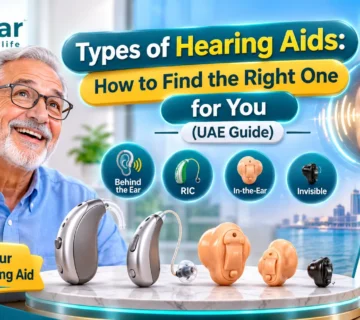
This is where many people start, when it really belongs in step three. The right style depends on your degree of hearing loss, not the other way around. Here are the most common styles:
Style | How it works | Often suits | Worth knowing |
|---|---|---|---|
Behind-the-ear (BTE) | The body sits behind the ear and sends sound to the canal through a tube and earmold or a speaker | Mild to severe loss; people who prefer larger controls | Larger and often more powerful, and easier to handle |
Receiver-in-canal (RIC) | A small body behind the ear with a thin wire to a tiny speaker in the ear canal | Most levels from mild to severe; people who want a discreet look | Very popular and compact; the speaker in the canal needs regular care |
In-the-ear (ITE, ITC, CIC) | Custom-made to the shape of your ear and worn inside it | People who want the least visible option, usually with mild to moderate loss | Smaller buttons and battery; can be affected by wax and moisture; may be harder for people with limited finger dexterity |
There’s no style that’s best for everybody. Smaller isn’t always better: the tiniest devices tend to have smaller batteries, fiddlier controls, and fewer features, and they can be hard to handle if your fingers or eyesight aren’t what they used to be. Bigger isn’t lower quality either. It’s often easier to use and stronger for people who need more amplification.
At iHear we supply Beltone hearing aids in both behind-the-ear and in-the-ear styles, and every model has its own page: Envision, Boost Max S, Commence, Serene, Boost SP, and Illuminate. As described on those pages, Boost Max S suits severe hearing loss, Commence is a practical choice for first-time users, and Envision adapts automatically to your surroundings. Your audiologist can help you pick the right one after your test.
Step 4: How Much Technology Do You Actually Need?
This is where prices climb, and where many mistakes happen. The technology level is what separates one hearing aid from another within the same brand, and you’ll often be shown the top tier because it’s “the best.” In reality, the best is whatever fits your life.
Start with a simple question: where do you listen most, and where do you struggle most? If you spend most of your day in a quiet home with one or two people, your needs are very different from someone who sits in work meetings, eats in busy restaurants, takes phone calls all day, or goes to family gatherings where everyone talks at once.
What do higher technology levels add?
Names differ from brand to brand, but the differences usually come down to:
- Speech and noise processing: higher levels are better at bringing speech forward and reducing background noise.
- Automatic adaptation: manufacturers now talk a lot about intelligent sound processing. In practice, it means the device recognises where you are (quiet room, crowded place, car) and adjusts its settings on its own, without you touching anything.
- Directional microphones: these focus on the sound in front of you, which helps in crowded places.
- Feedback control: it stops the annoying whistle that can appear when you hold a phone near your ear or hug someone.
- Wireless connectivity: calls, TV, and music streamed straight into your hearing aids over Bluetooth, plus control from a phone app.
- Charging: some models are rechargeable, others use small batteries you replace every few days. Each option has people it suits.
So ask yourself about every feature: will I really use this? Don’t pay for things you won’t use. But don’t underbuy either if you’re socially and professionally active. A level that’s too low for your life can make you conclude that hearing aids don’t work, when the device was simply weaker than what you needed.
Notes for buyers in the UAE
Heat, humidity, and dust are hard on small electronics, and a hearing aid sits against your ear and meets your sweat. Before you buy, ask how well the device resists moisture and dust, and how to clean and store it. Two simple habits save a lot of trouble: never leave your hearing aids in a car parked in the sun, and let them dry overnight in their case.
Do I need one hearing aid or two?
If both ears are affected, audiologists usually recommend two hearing aids, because using both ears helps your brain work out where sounds come from and follow speech in noise. If only one ear is affected, the decision depends on your test results. Ask your audiologist rather than letting budget alone decide.
Step 5: What Are the Best Hearing Aids for Seniors?
This section is for anyone buying for a parent, and for older adults themselves. The key point is simple: the best hearing aid for a senior isn’t the one with the most features. It’s the one that’s easiest to use and most comfortable to wear.
What matters most for older adults?
- Simplicity before features: clear, reasonably large buttons, a few simple programs, and as much automatic operation as possible. Plenty of older adults don’t want apps and menus.
- Battery or charging: some seniors struggle to insert a tiny battery with tired fingers, so a rechargeable model can be easier, as long as they get into the habit of placing it in the charger every night. If they prefer replaceable batteries, choose a size that’s easy to handle.
- Putting it in and taking it out: try it yourself. Can they put the hearing aid in alone? Can they take it out and clean it?
- Eyesight and dexterity: if vision is poor or hands tremble, styles that sit behind the ear are often easier than tiny ones that go deep in the canal.
- Long-term comfort: a hearing aid that hurts or presses ends up in the drawer. Ask for a trial of hours, not minutes.
- Follow-up and adjustment: the first weeks need fine-tuning visits. If getting to the clinic is hard, ask about remote adjustment. iHear offers it, so ask whether it’s available for the model you choose.
How do you convince a parent to get tested?
The biggest obstacle is often not price but denial: “I hear fine, you just don’t speak clearly.” Don’t start with the hearing aid. Start with the test. Suggest it the way you’d suggest a blood pressure or sugar check, and go with them to the appointment, since your presence reassures them and helps you understand the advice. Avoid saying “you can’t hear.” Describe what you noticed instead: “At the restaurant it was loud and you didn’t catch what we said.”
The World Health Organization notes that untreated hearing loss is linked to social isolation, and some studies link it to a decline in thinking abilities. That doesn’t mean a hearing aid alone prevents it, but it’s a good reason not to put the decision off.
How should you talk with someone who wears a hearing aid?
- Face them, so they can see your face; watching lips helps understanding.
- Speak clearly and calmly rather than shouting, because shouting distorts speech.
- Reduce background noise: turn off the TV or move somewhere quieter.
Step 6: How Much Should You Pay, and How Do You Compare Offers?
We won’t quote prices here, because prices vary with the model, the technology level, and what the offer includes, and any general number can mislead you. What we can give you is a way of thinking that protects you.
What makes hearing aid prices different?
- The technology level and sound processing.
- The style and size.
- Connectivity and charging features.
- The number of devices: one or two.
- The services included: testing, fitting, follow-up visits, and warranty.
The classic mistake: comparing prices only
Two hearing aids at the same price can differ completely in what’s included. One may come with a full assessment, follow-up visits, and a warranty, while the other is just a device in a box. So always ask for a written offer that states:
- Exactly which device is it: model and technology level?
- Is the price for one hearing aid or two?
- Does it include the hearing test, fitting, and follow-up visits? How many visits?
- How long is the warranty, and what does it cover: repair, replacement, loss, damage?
- Is there a trial period, and what are the return terms?
- Which accessories are included: charger, drying kit, earmolds, batteries?
- Who handles repairs, and where?
Does insurance cover hearing aids?
Coverage varies from policy to policy. Some plans cover part of the cost of hearing aids or testing, and others exclude them. Check your policy or call your insurer before buying, ask what paperwork is required, then ask the provider what they need from you to submit a claim.
And what about the “best hearing aid”?
You’ll find plenty of lists titled “best hearing aid,” complete with rankings. Take them with a pinch of salt. The best choice for someone with severe loss and a busy social life isn’t the best choice for a retiree with mild loss who lives quietly. No device beats every other for every person. The best hearing aid is the one chosen after a careful hearing test, fitted well, and followed up with your audiologist. And when two devices are close in quality, the quality of the fitting and follow-up can matter more than the difference between the models.

Step 7: Can I Try a Hearing Aid Before I Buy It?
Yes, and you should ask for it. A trial is the best thing you can do to make sure your decision is right, because a hearing aid that sounds wonderful in a quiet clinic can behave very differently in a crowded restaurant or in your own car. iHear lets you try a hearing aid before you buy, so ask about the length and terms of the trial for the model you’re considering.
What should you test during the trial?
Don’t just wear it around the house. Test it in your real life:
- At home: the TV, family conversation, and everyday household sounds.
- In a noisy place: a restaurant, a majlis, a shopping mall. This is where the difference between technology levels really shows.
- On phone calls: is the voice clear? Which ear do you prefer to use?
- In the car, at work, and in meetings.
- Your own voice: does it sound odd or hollow? That’s usually fixed by adjustment.
- Comfort: does anything hurt? Does your ear feel blocked?
- Ease of handling: putting it in, taking it out, cleaning it, charging it.
Write down your notes in a notebook or on your phone as you go. They’re what you’ll discuss with your audiologist, and they’re more reliable than whatever you remember later.
Why does everything sound strange in the first few days?
Because your brain has spent years without many everyday sounds: your footsteps, running water, rustling paper, even your own voice. When they all come back at once, they can sound loud and harsh. That’s normal. Many people start by wearing their hearing aids for a few hours in quiet places, then build up gradually over the first weeks, while the audiologist adjusts the settings based on their feedback. Don’t judge on day one, and don’t put up with serious discomfort in silence. Tell your audiologist.
Fine-tuning and follow-up
A trial isn’t a single session. The first setup is based on your audiogram, then the device is adjusted to what you actually experience in daily life. Ask how many follow-up visits the price includes, and whether some adjustments can be done remotely. At iHear, your hearing care professional can connect to your hearing aids through the phone app and adjust settings without you coming in for every minor change. Follow-up is what turns a good device into one that works for you.
Warranty
Ask how long the warranty lasts and what it covers, where repairs are done, and whether you’d get a loaner device during a repair. Get the warranty in writing, and keep the serial number and your purchase invoice.
How Do You Know the Seller Is Trustworthy?
Buy from a provider that can show it’s an authorized distributor of the manufacturer. That’s how you make sure the device is genuine and that warranty and servicing are recognised locally. Check three things:
- Proof of authorization: an authorization letter from the manufacturer or something equivalent. Don’t hesitate to ask for it.
- Who fits the device: a qualified audiologist, not just a salesperson.
- Local service: a repair route and a support team you can actually reach inside the UAE.
iHear is an authorized distributor of Beltone hearing aids in the UAE. You can learn more on our About us page, and you’re welcome to ask us about our authorization documents at any time.
Common Mistakes to Avoid
- Buying without a hearing test. You’d be buying a device for a problem nobody has measured.
- Choosing by size alone. Small isn’t a sign of quality, and it may not suit your hands or your degree of loss.
- Comparing only prices. Compare what the offer includes: testing, fitting, follow-up, and warranty.
- Buying a device that isn’t programmed to your hearing. A hearing aid needs to be set from your own test results.
- Judging it on day one. Your brain needs weeks to adapt.
- Skipping follow-up. Adjustment visits are part of the treatment, not a luxury.
- Expecting hearing like it used to be. A hearing aid helps you hear more clearly. It doesn’t turn back the clock.
- Neglecting cleaning. Wax and moisture are common causes of faults, so clean and dry your hearing aids every day.
Your Hearing Aid Buying Guide Checklist
Before you pay, run through this list:
- I’ve had a hearing test and I have a copy of my audiogram.
- I know the type and degree of my hearing loss.
- An ENT doctor has seen me if I have any warning signs.
- I know which style suits my ears, my hands, and my eyesight.
- I’ve chosen a technology level based on where I listen, not on the price list.
- I’ve asked whether I need one hearing aid or two.
- I have a written offer showing the device, what’s included, and the warranty.
- I know the trial period and the return terms.
- I know how many follow-up visits are included and whether remote adjustment is available.
- The seller can show it’s an authorized distributor, and I know where repairs are done.

Frequently Asked Questions
Final Thoughts and Your Next Step
Choosing a hearing aid is a decision you’ll make once every several years, so don’t rush it, and don’t put it off either. If you remember just one thing from this guide, make it this: start with the hearing test, then choose based on the results rather than the ad, the size, or the price. Try before you buy, and make sure there’s someone who’ll follow up with you afterwards.
If you’re in the UAE and you’d like to start with a free hearing test, message us on WhatsApp to book, explore our Beltone hearing aids, or contact us and our team will help you choose what suits you.

For more information
Feel free to contact us anytime. Our team is always ready to help you.




[…] sure where to begin? Our 7 steps before you buy a hearing aid is a useful […]
[…] تعرف من أين تبدأ؟ قائمة 7 خطوات قبل شراء السماعة الطبية مرجع […]
[…] The main thing to notice is that the choice starts with the degree of hearing loss. A child with a severe loss will not be helped by a low-power hearing aid, however attractive its features. To understand the differences between styles, read our guide to types of hearing aids, and for the buying steps see how to choose the right hearing aid. […]
[…] Hearing aids programmed on inaccurate numbers: a hearing aid is programmed from the audiogram. If the results are off, the amplification comes out too high or too low, and the patient complains of echo or of not hearing well. The fault may even be blamed on the hearing aid when it lies in the audiometer. You can read how everything starts with an accurate test in our guide on how to choose the right hearing aid. […]